Archive | 2012

DTE Bills

DTE WILL HOLD A ONE DAY SESSION FOR INDIVIDUALS WHO NEED HELP PAYING THEIR MONTHLY

DTE BILLS:  PLEASE BRING ALL BILLS THAT ARE IN THE REARS.


     DTE SESSIONS WILL BE HELD THURSDAY, NOVEMBER 13, 2012, 8AM TO 4PM AT THE

     FOLLOWING LOCATIONS:


           NEW PROSPECT MISSIONARY BAPTIST CHURCH

           6330 PEMBROOK @ LIVERNOIS


           PERFECTING CHURCH

           17950 VAN DYKE @ NEVADA


Please contact Customer Service at 800.477.4747


Forwarded by Midtown Alliance

And by Central District Police/Community Relations Council

Per Leslie Malcolmson

313-831-7931

lrmalcolmson@gmail.com

for lmalcolmson@voyager.net

Comments { 0 }

Social Security Michigan November Update

This issue features the 2013 Social Security changes along with a 2013 Fact Sheet.
There is an upcoming Webinar for America’s Veterans and a new initiative for all to get involved.Th
Vonda VanTil
Public Affairs Specialist
Social Security
3045 Knapp St NE
Grand Rapids MI 49525
w. 1-877-322-5883 X 18872

https://mail.npserv.org/service/home/~/Issue%2098%20Nov%202012.pdf?auth=co&loc=en_US&id=121394&part=2


Comments { 0 }

UTILITY BILL PAYMENT SCAM

DWSD WARNS OF UTILITY BILL PAYMENT SCAM

The Detroit Water and Sewerage Department (DWSD) is warning its customers to be alert to a bill payment scam that is affecting utility customers across the country. The scammers are claiming that President Obama will pay customers’ utility bills through a new federal program. That claim is false, and fraudulent.

According to the Better Business Bureau, utility customers have been contacted in person, through fliers, through social media, and via text messages with claims that President Obama can provide credits or apply payments to their bills. The scammers then direct the customers to send their Social Security and bank routing numbers. In return, customers are given a false bank routing number that will supposedly pay their utility bills.

In truth, there is no money in the “program,” and customers believe they’ve paid their bills, when in fact, they have not.

DWSD has posted an alert on its website at www.dwsd.org, urging customers not to participate in the scam. Moreover, DWSD officials advise customers not to provide any personal, confidential information to people who claim to be affiliated with a presidential program that pays utility bills. Customers also should keep records of payment verification, and should never assume a pending payment has been accepted until the payment is verified with the customer account number.

For more information on the utility bill payment scam, visit the Better Business Bureau’s website at www.bbb.org/us/article/president-obama-is-not-offering-to-pay-your-utility-bills-34928.

DWSD supplies high-quality drinking water to Detroit and 126 other communities in southeast Michigan. The Department provides wastewater services to Detroit and 76 other southeast Michigan communities.

http://www.dwsd.org/downloads_n/announcements/press_releases/pr07062012_dwsd_warns_of_utility_bill_scam.pdf


Forwarded by Midtown Alliance

And by Central District Police/Community Relations Council

Per Leslie Malcolmson

313-831-7931

lrmalcolmson@gmail.com

for lmalcolmson@voyager.net

Comments { 0 }

Rivertown Neighborhood

Attached is an article on the new Rivertown Neighborhood that is currently being constructed.  Phase One is anticipated to open in January, 2013.

http://www.crainsdetroit.com/article/20120819/FREE01/308199992/riverfront-retirement


Comments { 0 }

Program of All-Inclusive Care for the Elderly

Attached you will find the link to the National PACE website.  There you can look at all of the services provided by PACE plus all of the national PACE sites.  PACE already exists in the Detroit area (Center for Senior Independence (CSI), 7800 W. Outer Drive, Detroit, MI  48235) with areas extending out to zip codes in Highland Park, Grosse Pointes, Hamtramck, Lincoln Park, Redford, and Dearborn Heights.   In January 2013, the Detroit PACE site will be opening a second center on the eastside at the Rivertown Neighborhood (see SCoop post on Rivertown Neighborhood).  UMRC is looking to open a new PACE site which their catchement area will bump up to the current catchement area of CSI in Wayne County and cover the whole downriver community, including Belleville.  This is expected to occur within the next year or so.  In addition, there is a PACE site currently open in Battle Creek, MI, with their second site set to open in Kalamazoo in early 2013.  This is a wonderful opportunity for those seniors committed to aging in place!

The website is:  www.npaonline.org

Comments { 1 }

myride2

Roberta Habowski from AAA1-b is a very good presenter. She presented at Madison Heights Co-op and was very patient and informative. This is a senior and disability ride referral program.

Comments { 1 }

Nov 1 Post Teleconf Notes

Conference_Call_Notes[1]

Comments { 1 }

Updating Consent to Release Forms using a “180 Days Calendar”

If you would like an additional online tool  to calculate “180 days” from the initial date of signature on the consent forms, the website below works great!  There are quite a few out there, but this one has worked best for me.

http://www.calculatorsoup.com/calculators/time/date-day.php

Hope this helps!

Comments { 0 }

Invite to Hazel Park Manor for Bullying Webinar

Please accept this invitiation to view the AASC Webinar:

Older Bullies and the Bullied: Learning How to Intervene and Prevent this Hostile Relationship


For your convenience, the Webinar will be hosted at Hazel Park Manor from 2 – 3:30 p.m. Wednesday, Nov. 14.


Please note that you will not recieve CEUs for attending this Webinar — this is for information purposes only.


Hazel Park Manor is located at 701 E. Woodward Heights, Hazel Park, MI, 48030.


RSVP to Alexa Lempert at alempert@hannan.org or to Renee Saunders at rsaunders@hannan.org.

Comments { 1 }

Senior Bullying Blog

Bullying Blog located at http://www.mybetternursinghome.com/senior-bullying-guest-post-by-robin-bonifas-phd-msw-and-marsha-frankel-licsw/

Found on AASC LinkedIn Discussion.

What is Bullying?

By Robin Bonifas, PhD, MSW, Assistant Professor, School of Social Work, Arizona State University, Phoenix, AZ and Marsha Frankel, LICSW, Clinical Director of Senior Services, Jewish Family & Children’s Services, Boston, MA

Bullying, defined as intentional repetitive aggressive behavior involving an imbalance of power or strength (Hazelden Foundation, 2008), has been recognized for many years as a problem among children and youth in school systems. Recently “senior bullying” has also been noted to occur among older adults in many senior housing and senior care organizations, such as adult day health programs and assisted living facilities. What does bullying look like among the older generation? Surprisingly, in many ways it looks similar to bullying among younger age groups! For example, it includes verbal, physical or antisocial behaviors that occur in the context of social relationships, and, like youths, victims of senior bullying experience considerable emotional distress. Here are some specifics:

Verbal bullying involves name calling, teasing, hurling insults, taunting, threatening, or making sarcastic remarks or pointed jokes. For example, Mary was overheard at a Senior Center luncheon saying to Grace, “You don’t know what you’re talking about. Everyone knows you’re crazy!” Physical bullying involves pushing, hitting, destroying property, or stealing. For instance, two residents in independent senior housing got into an argument over control of the remote control in the community room.  One punched the other in the face. This was not the first time these two men exchanged words, but the first time it escalated to a physical assault. Antisocial bullying includes shunning, excluding or ignoring, gossiping, spreading rumors, and using negative non-verbal body language. Such non-verbal bullying includes mimicking someone’s walk or disability, making offensive gestures or facial expressions, turning one’s head or body away when the victim speaks, using threatening body language, or encroaching on personal space. For example, John was relocated to senior housing in Massachusetts following the loss of his home in the New Orleans hurricane. Several residents began spreading rumors that he was a longtime homeless man and was the first in a deluge of formerly homeless people who were going to be “dumped” into their building. As a result, other residents began to avoid John.

Contrary to the childhood adage “sticks and stones may break my bones, but names will never hurt me,” individuals who are bullied are significantly impacted by their peers’ negative behavior. Common responses include (Frankel, 2011):

  1. Reduced self-esteem
  2. Overall feelings of rejection
  3. Depression
  4. Suicidal ideation
  5. Increased physical complaints
  6. Functional changes, such as decreased ability to manage activities of daily living
  7. Changes in eating and sleeping
  8. Increased talk of moving out

The situation and type of behavior often determines whether or not problematic behavior is actually bullying. An individual who yells and strikes out at everyone is not necessarily a bully; similarly, behavior may be inappropriate and violate community rules, but not truly be bullying because the dynamics of power and control are absent. It is important to keep in mind that some people exhibit verbal or physical aggression when they are frustrated or upset as a way of communicating their feelings rather than to usurp others’ power. The potential for this situation increases in the context of dementia, due to impulse control problems, communication difficulties, frustration regarding impaired task performance, and misperceptions of potential environmental threats.

At the same time, although some problematic behaviors may not meet the academic definition of bullying, such behaviors can still feel to those on the receiving end as if they were being bullied. For example, residents in assisted living report the following peer behaviors to cause the most emotional distress (Bonifas, 2011):

  1. Loud arguments in communal areas
  2. Name calling
  3. Being bossed around
  4. Negotiating value differences, especially related to diversity of beliefs stemming from culture, spirituality, or socioeconomic status
  5. Sharing scarce resources, especially seating, television programming in communal areas, and staff attention
  6. Being hounded for money or cigarettes
  7. Listening to others complain
  8. Experiencing physical aggression
  9. Witnessing psychiatric symptoms, especially those that are frightening or disruptive

While only behaviors 2, 3, 6, and 8 really qualify as bullying, residents react or respond to such behaviors in the following comparable ways:

  1. Anger
  2. Annoyance
  3. Frustration
  4. Fear
  5. Anxiety/tension/worry
  6. Retaliation followed by shame
  7. Self isolation
  8. Exacerbation of mental health conditions

The similar reactions to both bullying and “bullying-like” behaviors implies that to understand bullying among older adults, it is necessary to develop knowledge about the individuals who exhibit bullying behaviors and individuals who are bullied. Our next blog will address this critical issue.
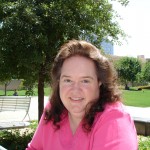
Robin Bonifas, PhD, MSW
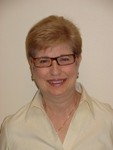
 

Marsha Frankel, LICSW


The Senior Bullying Series:

Part One: What is Bullying?

Part Two: Who Bullies and Who Gets Bullied?

Part Three: What is the Impact of Bullying?

Part Four: Potential Organizational-Level Interventions to Reduce Bullying

Part Five: Intervention Strategies for Bullies

Part Six: Strategies for Targets of Bullying


Comments { 1 }