
I came across a photo series by Tom Hussey, where he portrays older adults as they reflect on their younger selves in the mirror.
http://fstoppers.com/pics-reflections-portraits-of-the-elderly-as-they-once-were
I came across a photo series by Tom Hussey, where he portrays older adults as they reflect on their younger selves in the mirror.
http://fstoppers.com/pics-reflections-portraits-of-the-elderly-as-they-once-were
The Michigan Department of Community Health (MDCH) urges residents to protect themselves against the extreme heat forecast for the coming week with a few simple health precautions.
This is particularly important for older adults, infants and children, people with certain medical conditions, those who work in hot environments, and athletes.
Any time temperatures reach the high 80s and above, they can cause body temperature to rise.
This can result in muscle cramps, dizziness, severe heat illness, and even death. Heat illness occurs when the body is unable to cool down.
The body normally cools down by sweating, but during extremely hot weather, sweating may not be enough to cool the body. That’s when the risk of overheating to the point of becoming ill occurs.
“During the extreme heat that we’re expecting this week, it’s very important to take some key steps,” said Dr. Matthew Davis, Chief Medical Executive at the MDCH. “For ourselves, it’s important to stay well hydrated, limit exposure to heat, and be vigilant for signs of heat-related illness.
“In addition, we should look out for our neighbors during these especially hot days, to see if we can help them stay safe from the heat,” said Dr. Davis. “If you’re looking for relief, your local emergency management program can help with information and – depending on the location – with cooling centers.”
CHECK: Weather forecast across metro Detroit
Tips to Avoid Heat Illness:
Use air conditioning or spend time in air-conditioned locations, when possible. Public authorities may set up cooling centers in your area to provide air-conditioned locations. Call 211 or check with local authorities for more information, including city and county websites.
Take a cool bath, shower, or swim.
Minimize direct exposure to the sun.
Limit time outdoors as much as possible, but take frequent breaks if you must be outside.
Stay hydrated – drink water or nonalcoholic fluids; try to avoid fluids with caffeine, because they can dehydrate you.
Wear loose fitting, light-colored clothes.
Check on your neighbors, friends and family members, especially those who are older, those with very young children, or those who have health problems.
Never leave children, the elderly, or pets unattended in a vehicle. Even with the windows rolled down, or just for a few minutes, it is never OK to leave anyone in a vehicle in extreme heat.
Use a fan when the windows are open or the air conditioner is on when the weather begins to heat up. Once the temperature reaches the high 90s, fans will not prevent heat illness.
Understanding Heat Illness:
If you are experiencing dehydration, move to a shaded or air-conditioned area, replace fluids by drinking water, and consult a physician if symptoms persist or if there is an existing condition that could be complicated by increased fluid intake.
Signs of heat exhaustion include headache, moist and pale skin, nausea, dizziness, weakness and exhaustion. To treat exhaustion, seek shade or a cool place. Drink a half glass of cool water every 15 minutes, remove or loosen any tight clothing, and apply a cool, wet towel or compress. Heat exhaustion can develop into heat stroke, so if symptoms persist or worsen, seek emergency medical treatment.
Call 911 for immediate medical help and try to cool the person down. If possible, put them in a tub of cool water or shower them with a garden hose.
Forwarded by Midtown Alliance
And by Central District Police/Community Relations Council
Per Leslie Malcolmson
 Camille is the service coordinator at the Village of Peace Manor, located in ClintonTownship, where she has been employed since September 2004. She obtained her Bachelors degree in Sociology from WayneStateUniversity, then attended CentralMichiganUniversity, where she achieved a Masters in Business Management. She worked for the Social Security Administration for ten years as a Disability Examiner. Working as a Disability Examiner, she gained invaluable experience in the medical field with intensive medical training. While working at the Social Security office she enjoyed problem solving and working with the aging population. From this job she grew to love working with seniors, which sparked an interest to learn more about the population. Camille decided to leave the Social Security office and return to school.
Camille decided to attend MadonnaUniversity, in Livonia, Michigan, to study gerontology, where she received her Associates Degree. Madonna was a great place for Camille’s career. The school has a great gerontology department with a wonderful faculty. The faculty and Staff at Madonna influenced Camille’s career choice to become a service coordinator. The individuals most influential to Camille’s career were Dr. Anita Herman, the head of the gerontology program, and Marilyn Goering, a counselor and adjunct professor. These professors challenged and help cultivate the talents Camille currently possessed before entering the program. While at Madonna, Camille received a Nursing Home Administrator license from the State of Michigan.
After Madonna, Camille gained experience 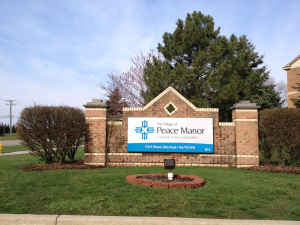 as a service coordinator at the National Church Residences senior housing in Harper Woods, for four years, before working at PVM. Camille’s belief in the saying, “There but for the Grace of God, Go I,” has guided her life thus far. She is very passionate about the senior community, and has devoted herself to helping the community. She loves to advocate for seniors to organizations and private companies to promote affordable assisted living in the community.
When Camille is not working at her PVM village or advocating for affordable senior housing, she loves volunteering with animals, reading, walking, and loves to travel. She really enjoys traveling overseas, her favorite places to visit are Europe, England, and Hawaii.
Below is a great article that was in the Freep this weekend. Enjoy!
http://www.freep.com/apps/pbcs.dll/article?AID=2013307140027
Please share this link to the 411Vote guide which has a printable guide for each of the 7 Detroit voting districts as well as a guide for all the districts. It is very important to share the information as soon as possible so that people voting in the primary have access to the candidates’ information and their responses to several questions. Thank you for helping to share this with as many groups and people
that you can. Cheryl Bukoff
Ellen Kayrod Gallery
Luella Hannan Foundation
“Kayrod Summer All Media Open”
June 28 – August 16, 2013
This exhibit brings together a diverse assembly of artists and their work, demonstrating the extraordinary range of talent and creativity in the Detroit community.
Opening Reception
Friday, July 12, 2013
12:30 – 2:30 pm
Gallery hours are Monday – Thursday by appointment, and Fridays 9 am-7pm. The Gallery is closed weekends. For more information about the gallery contact Pam Halladay at phalladay@Hannan.org or visit www.Hannan.org
Are you having a hard time figuring out if a resident/member might qualify for Nursing Home Care/Mi-Choice Waiver/PACE program? They all meet the same admission requirements, and must be screened utilizing the MDCH LOC Determination Form. This form determines if the individual meets the necessary Level of Care (LOC) requirements for these programs. Attached is the LOC Determination form which is utilized by all organizations the offer nursing home care, medicaid waiver or PACE programming. In addition, if you follow the link below, it will take you to the Michigan Department of Community Health (MDCH) website with more information about the LOC Determination Form and the Freedom of Choice Form. The Freedom of Choice form must be provided to all individuals screened on the LOC Determination Form to inform them if they meet the LOC needs, plus what their options are if they meet the LOC needs.
http://www.michigan.gov/mdch/0,1607,7-132-2945_42542_42543_42546_42554-103102–,00.html#LOC_Form
Below are two excerpts from a very interesting article, which you can read here.
“Several aging experts suggest within a short time it may be possible to increase life expectancy by decades. Even without new discoveries, the United Nations now estimates life expectancy over the next century will approach 100 years for women and a few less for men. According to the most recent census (2010) the U.S. centenarian population has grown 65.8 percent over the past three decades, from 32,194 hundred-year-olds in 1980 to 53,364 centenarians in 2010. In contrast, the total population has increased only 36.3 percent over the same time period. Most aging experts agree that, on average, our bodies are biologically capable of successfully functioning to 100 ±5 years or so.”
“Believe it or not, some carefully done research shows genes account at best, for only about 15-30 percent of lifespan. This estimate derives from the famous Danish twin study (published in 1996). Researchers studied some 2,872 pairs of Danish twins born between 1870 and 1900—a group selected because by now their life “experiment” has run its course—and found lifespan is only “moderately heritable,” estimated to be about 15-30 percent at the most! (In fairness, some gerontologists think those who live to 100 years or older might prove an exception to the rule. They posit centenarians owe their good fortune to their inheritance of a small number of powerfully acting longevity genes, variants that are uncommon in the general population but that have dramatic life-extending effects at older ages.)”
“They say there are no ‘do-overs’ in life. Tell that to physician Ronny Schmier, BA ’71, a master’s candidate in U-M’s new program in health informatics. Last fall he returned to campus with his wife, Ellen, BA ’71. They rented an apartment on Huron Street and, four decades after the fact, re-immersed in college life. It was all good—until one of Schmier’s classmates called him ‘sir.'”
Read the full article here.